ERP Integration Strategies for Chemical Manufacturing Workflows
Discover proven ERP integration strategies for chemical manufacturing. Improve compliance, batch traceability, and production efficiency with expert...
15 min read
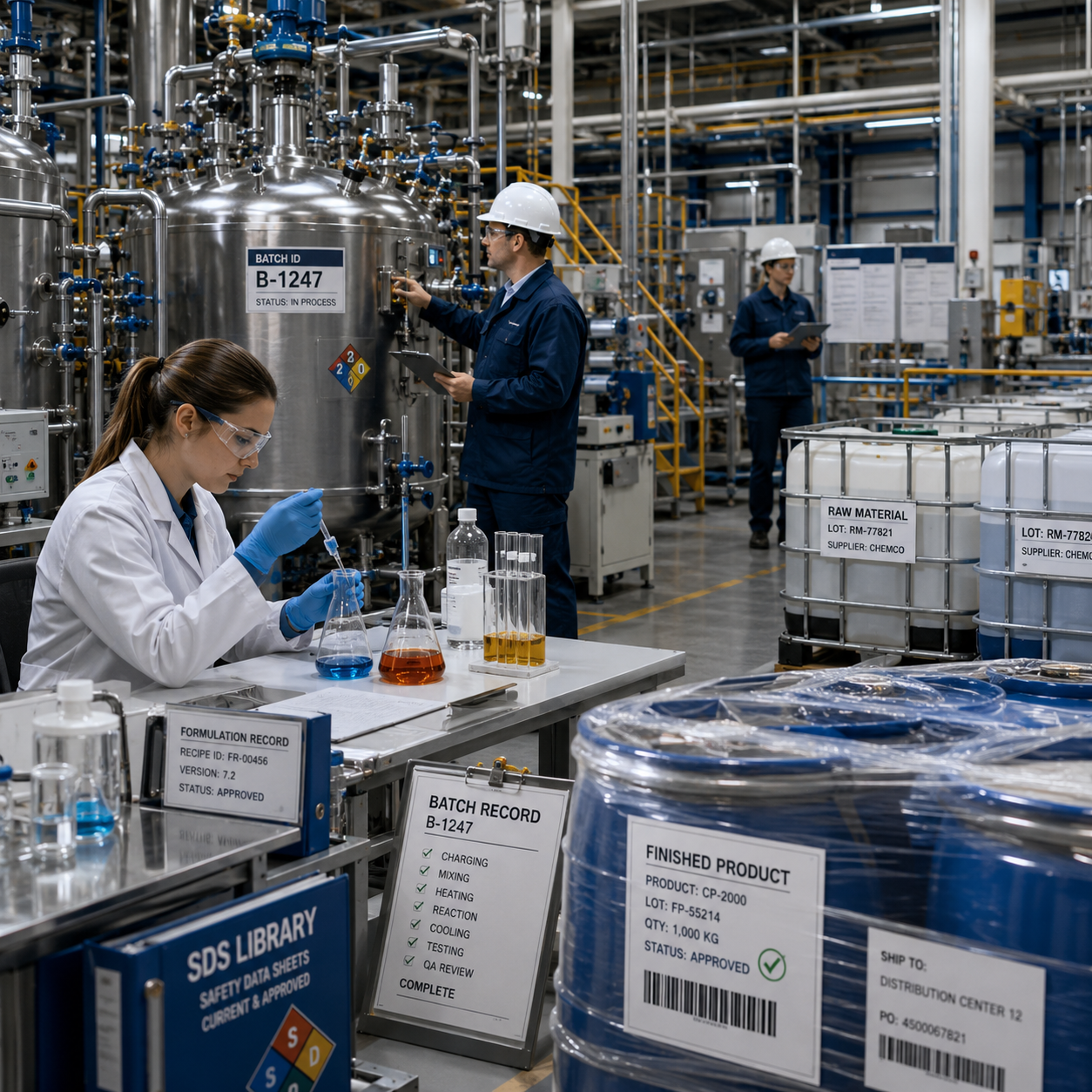
An ERP for chemical manufacturing helps organizations manage formula security, batch traceability, regulatory compliance, and quality processes within a single system. For chemical manufacturers operating in highly regulated environments, the right ERP provides the controls, visibility, and auditability needed to manage compliance without relying on spreadsheets, disconnected applications, or manual workarounds.
That level of control is becoming increasingly important. Under the EPA's PFAS reporting rule, some manufacturers may be required to report information dating back more than a decade. Requirements like these highlight a growing challenge for the chemical industry: maintaining accurate, traceable records across formulas, materials, suppliers, production activity, and compliance documentation. When information is scattered across multiple systems, organizations increase the risk of reporting errors, documentation gaps, audit findings, and slower responses to quality or recall events.
The most effective chemical manufacturing ERP systems embed compliance directly into daily operations, connecting formula management, lot tracking, quality workflows, and regulatory reporting in a single environment.
For chemical manufacturers, compliance should not operate as a separate administrative function. The most effective ERP systems integrate compliance into daily operations, helping organizations improve visibility, strengthen governance, maintain product quality, and respond more effectively to audits, investigations, and regulatory reporting requirements.
Chemical manufacturers operate in one of the most complex and highly regulated manufacturing environments. Formula management, hazardous materials, product traceability, quality control, environmental reporting, and compliance documentation must all work together while supporting efficient production and inventory operations.
Many ERP systems can manage standard manufacturing processes, but chemical manufacturers often require industry-specific capabilities designed to address the unique requirements of the chemical industry. An ERP for chemical manufacturing should support the entire product lifecycle, from raw material sourcing and formulation management to quality control, traceability, and regulatory reporting.
For many organizations, ERP success depends on selecting a solution that helps streamline compliance without creating additional administrative burden. The right ERP system embeds compliance directly into operational workflows rather than treating it as a separate process.
Compliance in the chemical industry extends far beyond regulatory reporting. Manufacturers must maintain accurate records across formulas, hazardous materials, inventory, quality testing, supplier activity, and product traceability while demonstrating that controls exist throughout the production process.
The challenge is not simply collecting information. Organizations must be able to locate, validate, and report it when auditors, customers, regulators, or quality teams request it. As compliance requirements evolve, that becomes increasingly difficult when data is spread across spreadsheets, legacy applications, and disconnected workflows.
A modern ERP helps address these challenges by embedding compliance controls directly into production, inventory, quality, and reporting processes. Instead of treating compliance as a separate function, organizations can build it into day-to-day operations, improving both compliance readiness and operational visibility.
Many ERP platforms support standard manufacturing requirements but lack the specialized functionality that chemical manufacturers need.
These limitations often create workarounds outside the ERP system. Compliance records end up in spreadsheets, quality data lives in separate applications, and traceability processes become increasingly manual. Over time, those workarounds reduce visibility, increase compliance risk, and make it more difficult to maintain consistent controls across operations.
The right ERP for chemical manufacturing should support formula management, traceability, quality control, inventory visibility, and compliance reporting within a single operating environment. By connecting these processes, organizations can reduce administrative effort, improve data consistency, and strengthen compliance across the business.
Evaluating ERP options for chemical manufacturing? RubinBrown's ERP Advisory Services help organizations define requirements, assess risks, and select solutions that support compliance, traceability, and long-term operational performance.
Read More: ERP Data Migration Checklist: Best Practices for Success
For many chemical manufacturers, formulation data represents one of the organization's most valuable assets. Years of research, testing, and product development are often embedded within proprietary formulas, making formula security both a business and compliance priority.
A chemical manufacturing ERP should provide more than basic access controls. It should establish a framework for governing the creation, modification, approval, and maintenance of formulas throughout their lifecycle.
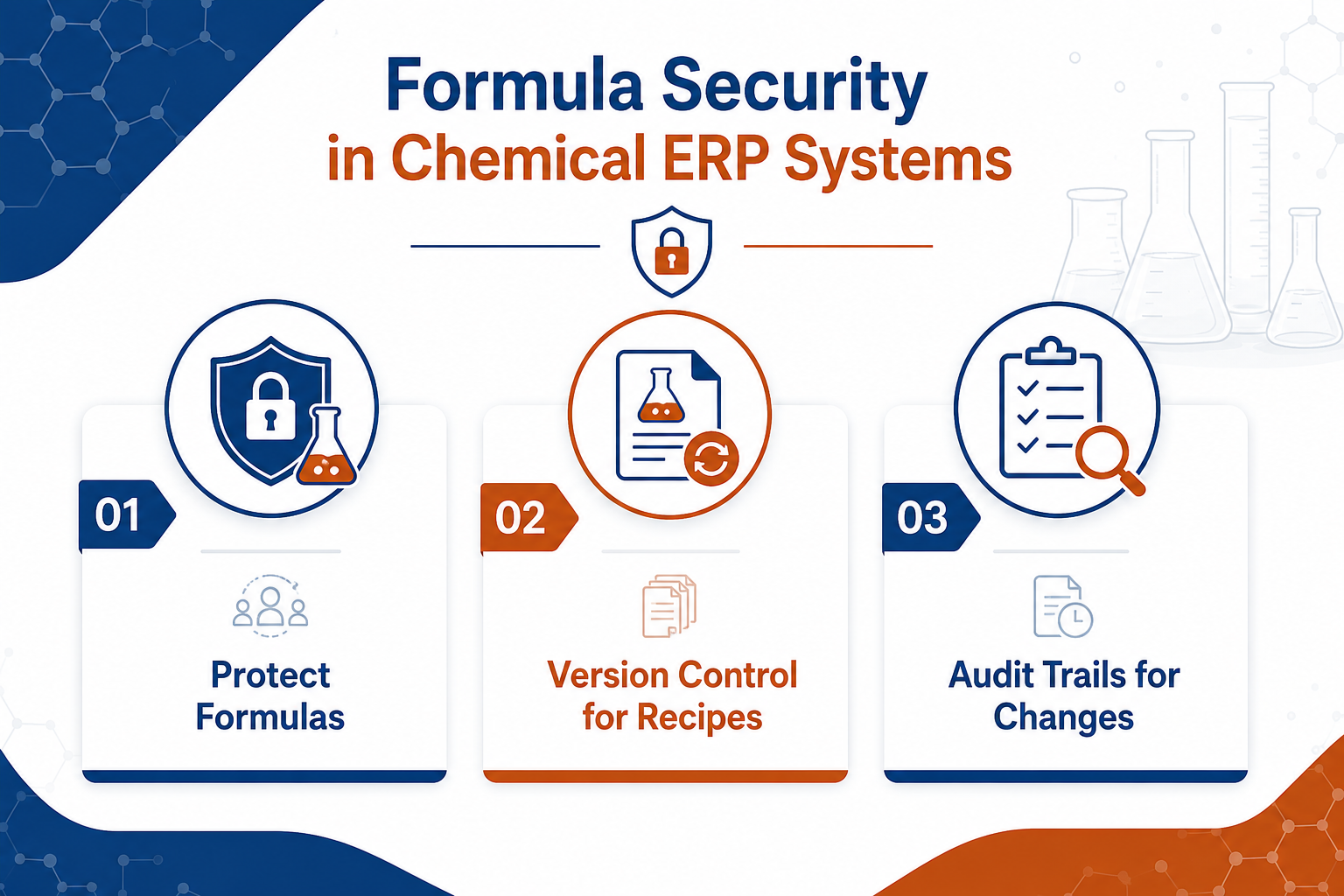
Unauthorized access, undocumented changes, or weak approval controls can expose intellectual property while also creating quality and compliance risks. Formula security should balance protection and operational efficiency, ensuring employees have access to the information they need without unnecessarily exposing sensitive data.
A chemical ERP should support role-based security that aligns access with business responsibilities. Production teams should work from approved formulations, while research, quality, and operations teams maintain appropriate levels of visibility and control. This approach helps protect proprietary information without creating barriers to collaboration or production activities.
Formulations evolve because of regulatory updates, supplier changes, raw material substitutions, product improvements, and cost pressures. Without formal version control, organizations risk producing against outdated specifications or losing visibility into historical decisions.
An ERP for chemical manufacturing should maintain revision histories, effective dates, approval workflows, and historical records that document how formulations have changed over time. These controls help ensure production teams are always working from approved formulations while providing a complete record for quality reviews, audits, and compliance investigations.
Formula security extends beyond access controls and version management. Organizations must also be able to demonstrate who changed a formula, what changed, when the change occurred, and why it was approved.
Comprehensive audit trails support governance, quality investigations, customer inquiries, and regulatory reviews. They also provide leadership with greater visibility into how critical product data is managed across the organization.
Ultimately, formula security is a governance issue as much as a technology issue. Organizations that establish strong controls around formulation data are often better positioned to maintain product quality, support compliance requirements, and achieve long-term ERP success.
Read More: How to Build a Data Governance Framework for Your ERP
Traceability is one of the most important capabilities of an ERP for chemical manufacturing. Chemical manufacturers must be able to demonstrate where materials originated, how products were produced, and which finished goods contain specific raw material lots. Without that visibility, responding to quality incidents, customer inquiries, regulatory audits, or product recalls becomes significantly more difficult.
A chemical manufacturing ERP should provide real-time visibility into material movement, production activity, quality records, and inventory transactions across the entire manufacturing lifecycle. This visibility helps organizations strengthen compliance while improving operational control.
Traceability supports far more than regulatory compliance. It helps organizations maintain product quality, strengthen supplier accountability, improve recall readiness, and reduce operational risk. Just as importantly, it allows manufacturers to reconstruct production history when questions arise about a product, batch, supplier, or quality event.
Many compliance requirements depend on an organization's ability to demonstrate exactly how a product was produced and where materials were used. An ERP system supports this effort by creating a connected record of material movement, production activity, testing results, and inventory transactions. Instead of piecing together information from multiple systems, teams can access a single source of truth.
Chemical production environments often involve multiple suppliers, batch-based manufacturing processes, formula-driven production, and extensive quality testing requirements. Maintaining visibility across these activities can become challenging when information is stored in separate systems or managed manually.
An ERP for chemical manufacturing should maintain batch genealogy that connects raw material lots, work-in-process inventory, production batches, quality inspections, finished goods, and customer shipments. This creates a complete history of how products move through the manufacturing process and provides the context needed to investigate quality issues quickly and accurately.
When supplier issues, quality concerns, or production deviations occur, organizations can identify potential downstream impacts more efficiently and make faster, more informed decisions.
Product recalls are among the most disruptive events chemical manufacturers can face. The ability to identify affected products quickly can significantly reduce investigation time, operational disruption, and customer impact.
Organizations without strong traceability often struggle to determine which products were affected, which customers received shipments, and which suppliers contributed materials to a particular batch. As a result, investigations become slower, more resource-intensive, and more difficult to manage.
A chemical ERP solution helps address this challenge by maintaining complete lot and batch records throughout the production lifecycle. Rather than relying on spreadsheets, paper documentation, or manual reconciliation efforts, teams can identify affected products, suppliers, and customers through structured reporting and traceability tools.
A mature traceability process should include:
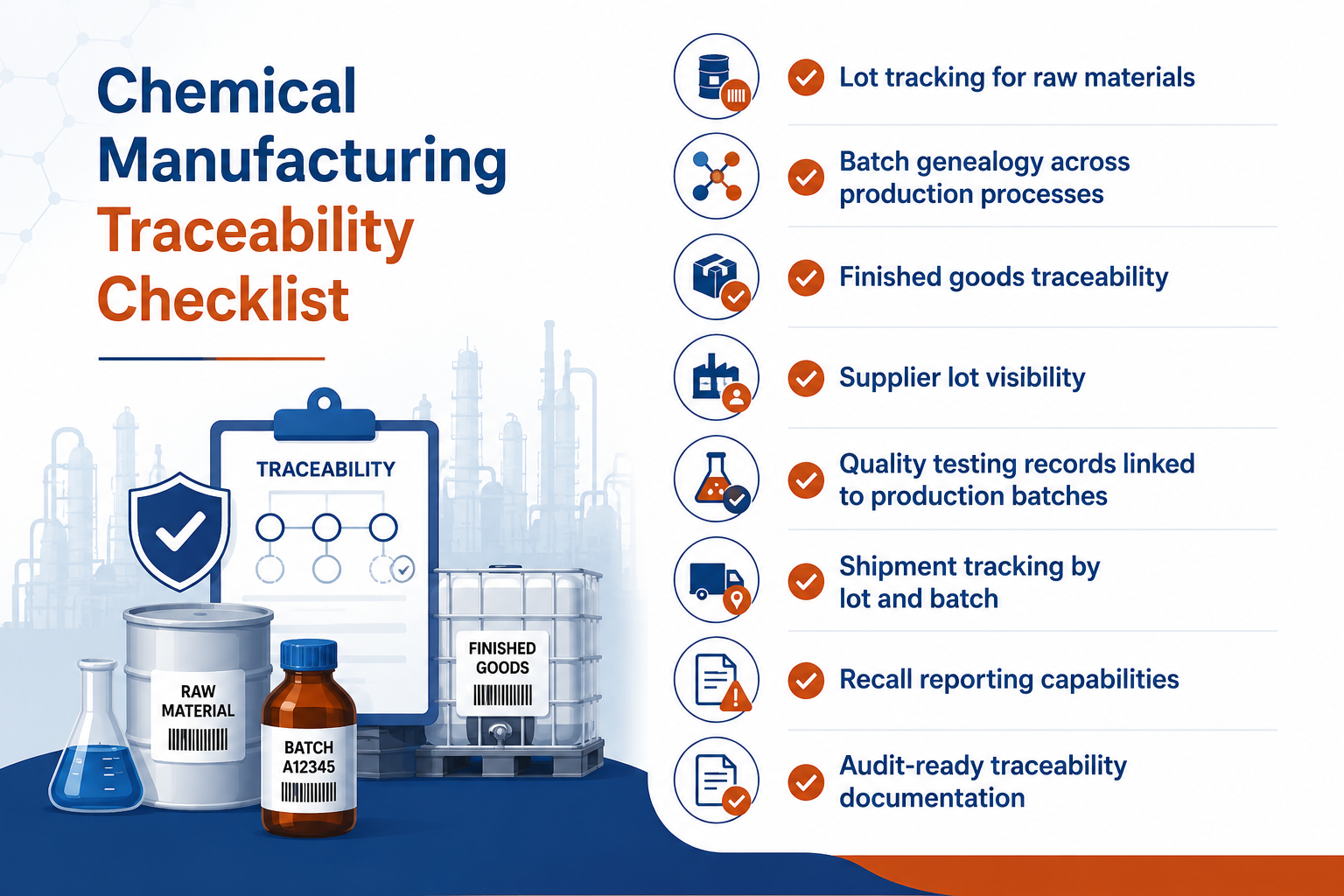
Strong traceability capabilities help chemical manufacturers streamline compliance, improve quality control, reduce operational risk, and respond more effectively when issues arise.
Read More: ERP Data Migration vs. Data Integration: Key Differences (And Why You Need Both
For many chemical manufacturers, regulatory documentation is one of the most resource-intensive aspects of compliance management. Safety Data Sheets (SDS), environmental reports, quality records, hazardous materials documentation, and supplier certifications must remain accurate, accessible, and up to date throughout the product lifecycle.
When these records are spread across file shares, spreadsheets, email inboxes, and disconnected applications, organizations increase compliance risk while creating unnecessary administrative burden. An ERP for chemical manufacturing helps address these challenges by centralizing documentation and connecting regulatory records directly to operational processes.
Chemical manufacturers often maintain hundreds or even thousands of compliance-related documents across multiple products, formulations, facilities, and suppliers. Managing this information manually becomes increasingly difficult as operations grow.
A chemical manufacturing ERP should serve as a centralized source of truth for SDS records, product specifications, supplier certifications, quality documentation, environmental reports, and other compliance-related information. Centralizing documentation helps reduce duplication, improve version control, and ensure employees are working from approved records.
Just as importantly, it improves collaboration across compliance, quality, production, and operations teams. Instead of searching multiple systems for information, employees can access the documentation they need directly within the ERP environment.
Regulatory reporting often requires information from multiple business functions, including production, inventory, quality management, supplier records, and traceability data. When these activities are managed manually, organizations frequently encounter reporting delays, inconsistent data, missing documentation, and increased audit preparation effort.
An ERP helps streamline compliance by pulling information directly from operational records rather than relying on spreadsheet consolidation or manual data collection. This creates a more reliable reporting process while reducing administrative effort.
The goal is not simply faster reporting. It is creating a controlled and auditable environment where compliance information can be produced consistently and confidently when needed.
Documentation issues often surface during audits, inspections, customer inquiries, or quality investigations. Multiple versions of the same document, outdated SDS records, missing approval histories, and incomplete audit trails are often symptoms of broader governance and process challenges.
A chemical ERP helps reduce these risks by linking documentation directly to formulas, batches, inventory transactions, quality records, and compliance workflows. This creates stronger traceability between operational activity and supporting documentation while improving visibility across the organization.
Organizations that integrate compliance documentation into their ERP environment are often better positioned to improve audit readiness, strengthen governance, and reduce the operational burden associated with regulatory compliance.
Read More: The Ultimate ERP Internal Audit Checklist for CFOs
Product quality and regulatory compliance are closely connected within chemical manufacturing operations. An ERP for chemical manufacturing should help organizations manage quality throughout production while maintaining the documentation, traceability, and controls needed to support compliance requirements.
Quality management should not operate separately from production, inventory, formulation, and compliance processes. When quality data lives in disconnected systems, organizations lose visibility into issues that may affect product consistency, audit readiness, and operational risk.
A modern ERP system helps chemical manufacturers embed quality activities directly into operational workflows. Raw material inspections, in-process testing, finished goods validation, supplier quality reviews, non-conformance tracking, and corrective action management should connect to the same system that manages inventory, production, formulas, and compliance documentation.
This integration gives quality teams better visibility into issues as they occur. Instead of waiting for periodic reviews or manually reconciling quality records, organizations can identify concerns earlier and take corrective action before they affect finished goods, customer shipments, or compliance reporting.
For highly regulated chemical manufacturers, this connection is especially important because product quality directly affects compliance readiness. Strong quality integration helps ensure that testing results, approvals, deviations, and corrective actions are documented as part of the normal production process.
Even mature chemical manufacturers encounter deviations, failed tests, supplier issues, and process exceptions. The difference is how consistently those issues are captured, investigated, resolved, and prevented from recurring.
An ERP system for chemical manufacturing should support non-conformance tracking, investigation workflows, root cause analysis, corrective action management, preventive action planning, and related compliance documentation. These capabilities help teams move beyond issue identification and create a structured process for accountability and improvement.
For executives, this improves visibility into recurring risks. Leaders can see whether issues are isolated events or signs of deeper process, supplier, formulation, or training problems. That visibility supports better decisions about operational improvement, supplier management, quality investments, and compliance priorities.
Audit readiness is not simply about passing an inspection. It reflects the organization’s ability to demonstrate control over business processes, quality management activities, compliance requirements, and production records.
A robust ERP system helps maintain audit readiness through electronic audit trails, document retention, approval workflows, quality records management, batch traceability documentation, and compliance reporting. When these controls are built into daily workflows, teams spend less time preparing for audits and more time managing performance.
The goal is ongoing compliance monitoring, not last-minute documentation cleanup. Chemical manufacturers that connect quality management and compliance monitoring within ERP are better positioned to reduce risk, maintain product quality, and respond confidently to audits, customer inquiries, and regulatory reviews.
Read More: How to Build a Data Governance Framework for Your ERP
Selecting the right ERP for chemical manufacturing requires a clear understanding of operational, compliance, and reporting requirements. While many ERP software solutions claim to support manufacturing companies, the chemical manufacturing industry faces unique challenges that often require more specialized capabilities.
The right ERP for the chemical industry should address formulation management, hazardous materials tracking, traceability, quality control, and regulatory compliance within a single operating environment. More importantly, organizations should focus on business capabilities rather than vendor marketing claims. The question is not whether an ERP solution can manage transactions. It is whether it can support the operational realities of chemical manufacturing while helping organizations streamline operations, improve productivity, and support long-term ERP success.
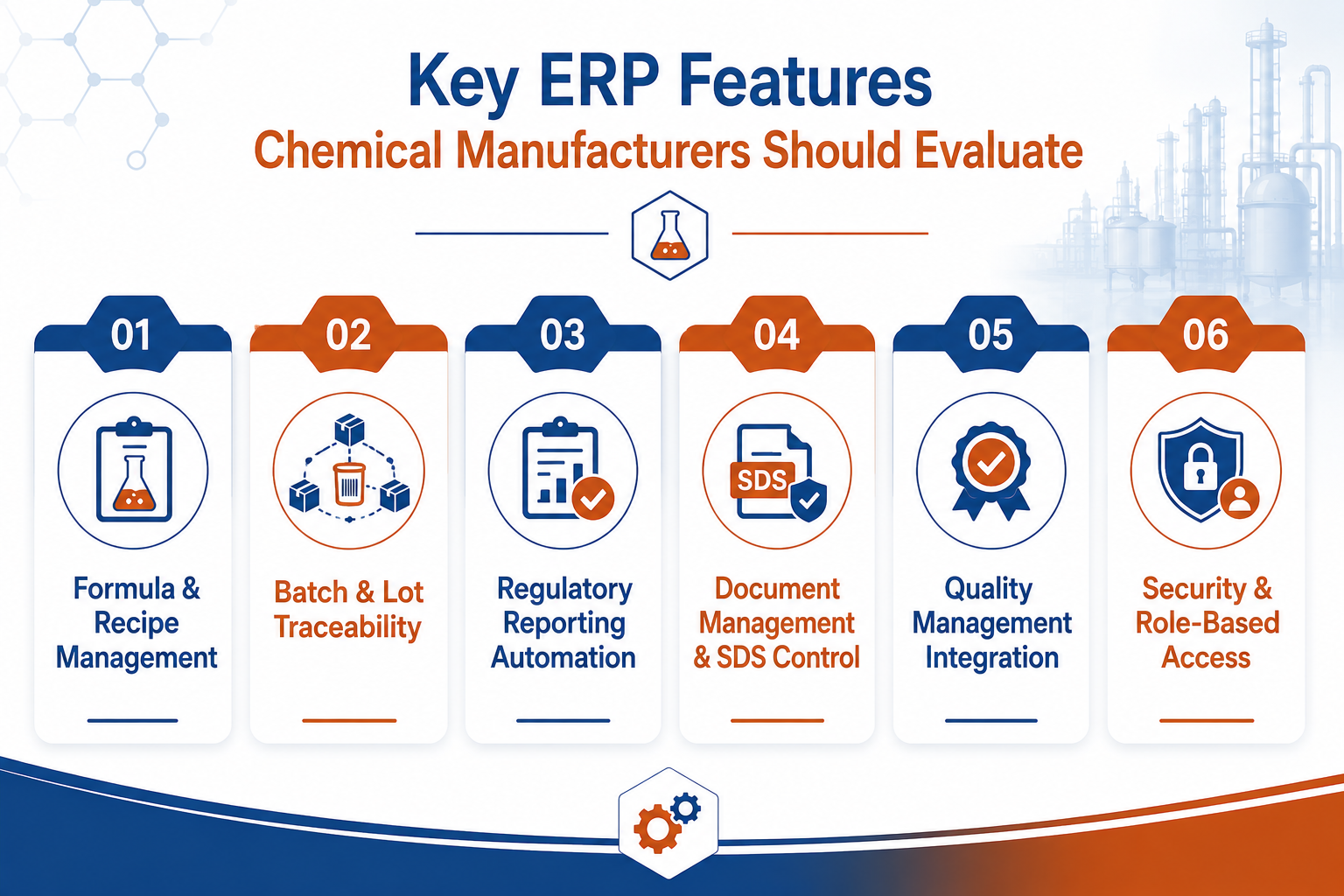
Formula management is a foundational requirement for any chemical manufacturing ERP software platform. Organizations should evaluate how the system manages formulation security, version control, revision history, approval workflows, scaling, and costing.
These capabilities help ensure product consistency while protecting intellectual property and maintaining visibility into how formulations evolve over time. They also help chemical companies manage material costs, support regulatory requirements, and maintain quality standards across every stage of production.
Traceability remains one of the most important ERP success factors in the chemical industry. A chemical ERP solution should provide visibility into material movement, production activity, inventory transactions, supplier relationships, and customer shipments.
Organizations should look for capabilities such as batch genealogy, raw material tracking, supplier lot visibility, finished goods traceability, and recall support. These capabilities help ensure the right materials are available at the right time while supporting compliance, quality investigations, and supply chain visibility.
Compliance reporting requirements continue to expand as the chemical industry faces unique challenges related to environmental reporting, hazardous materials management, and product documentation. As a result, organizations should evaluate how an ERP system supports compliance reporting, audit readiness, supplier compliance tracking, and broader governance requirements.
The goal is not simply to reduce administrative effort. Effective reporting automation helps chemical manufacturers make informed decisions while reducing the risk associated with manual reporting processes.
Document management is often overlooked during ERP selection, yet it remains a critical component of compliance management. An ERP for the chemical manufacturing industry should support centralized SDS management, version control, approval workflows, document retention, and audit readiness.
When documentation is integrated directly into chemical operations, organizations gain stronger governance while reducing the risk of outdated records, duplicate files, and inconsistent compliance information.
Quality management should operate as part of the production process rather than as a separate function. Organizations should evaluate how inspections, testing workflows, non-conformance management, corrective actions, and supplier quality activities connect to production, inventory, and compliance processes.
The stronger this integration becomes, the easier it is to identify issues early, maintain product quality, and streamline your chemical manufacturing operations without sacrificing compliance or visibility.
Chemical manufacturers often manage sensitive formulation data, compliance records, supplier information, and proprietary chemical products. As a result, security should be evaluated as both an IT requirement and a governance requirement.
A purpose-built, industry-specific ERP should support role-based access controls, formula security, audit trails, segregation of duties, and change management controls. These capabilities help organizations protect critical information while supporting compliance, accountability, and long-term operational stability.
Ultimately, the right ERP for chemical manufacturing should provide more than individual features. The ideal ERP solution creates a connected environment where formula management, traceability, quality control, documentation, security, and compliance management work together to support operational performance and regulatory readiness. Whether evaluating ERP software for chemical manufacturing, comparing ERP systems in the chemical industry, or assessing a broader ERP modernization initiative, organizations should focus on finding a solution that aligns with their specific business requirements and long-term objectives.
Read More: ERP in Manufacturing: What It's Really Like Day to Day
Many chemical manufacturers assume compliance is under control because reports are submitted on time and audits are completed successfully. In reality, compliance risk often develops beneath the surface when critical activities rely on disconnected systems, manual processes, or undocumented workarounds.
A chemical manufacturing ERP should reduce compliance exposure by embedding controls directly into business processes. When compliance activities operate outside the ERP environment, organizations often lose visibility into whether information is accurate, complete, and consistently maintained.
One of the clearest warning signs is when compliance-related activities are managed through spreadsheets, email workflows, standalone databases, or shared file repositories. SDS management, environmental reporting, quality records, and audit documentation frequently become disconnected from the systems used to manage production, inventory, and traceability.
These workarounds create multiple versions of the truth and make it difficult to determine whether compliance information is current, approved, and aligned with operational activity. As the organization grows, maintaining consistency becomes increasingly difficult.
Traceability is only as strong as the underlying data and systems supporting it. If teams must manually investigate raw material usage, production batches, quality results, or customer shipments across multiple systems, traceability gaps can quickly emerge.
These limitations may not be obvious during normal operations, but they often become apparent during audits, quality investigations, or product recalls. Organizations that cannot quickly reconstruct production history may face increased operational disruption and compliance risk when issues occur.
Formula data often represents one of the most valuable assets within a chemical manufacturing business. Weak access controls, inconsistent approval processes, incomplete audit trails, and uncontrolled formula revisions can create both compliance and intellectual property risks.
Organizations should evaluate whether their ERP environment provides the governance controls needed to protect formulation data while maintaining collaboration across research, quality, operations, and production teams.
Compliance reporting should be driven by structured data and repeatable processes. When reporting depends on spreadsheet consolidation, manual data collection, email approvals, or offline calculations, the risk of errors and inconsistencies increases.
Beyond the reporting burden itself, manual processes often indicate deeper issues with data governance, system integration, and operational visibility. As reporting requirements become more complex, these weaknesses become harder to manage.
Audit trails are fundamental to compliance, quality management, and governance. Organizations should be able to demonstrate who performed an action, what changed, when it occurred, and how approvals were documented.
When audit records are incomplete, difficult to access, or maintained across multiple systems, responding to audits, investigations, and customer inquiries becomes significantly more challenging. Strong auditability should be built into everyday workflows rather than treated as a separate compliance activity.
If several of the following conditions exist, it may be worth evaluating whether your current ERP environment adequately supports chemical manufacturing compliance requirements:
Compliance documentation is managed outside the ERP
Formula changes are tracked manually
Lot traceability requires manual investigation
Multiple versions of SDS records exist across the organization
Regulatory reporting relies on spreadsheets or offline processes
Approval workflows are inconsistent or undocumented
Quality documentation is maintained in separate systems
Audit-ready reporting is difficult to produce
Organizations experiencing multiple warning signs should assess whether their ERP system provides the traceability, governance, documentation controls, and compliance capabilities required to support long-term operational and regulatory requirements.
Read More: The Ultimate ERP Internal Audit Checklist for CFOs
Technology alone does not create compliance. ERP success depends on aligning systems, processes, governance, and operational requirements into a cohesive strategy.
Chemical manufacturers that achieve the strongest outcomes typically define compliance requirements before ERP selection, implementation, or modernization efforts begin. Rather than evaluating software based solely on features or vendor demonstrations, they first establish the business, quality, traceability, and reporting requirements the ERP must support.
A successful ERP strategy begins with understanding the organization's regulatory obligations, quality management processes, traceability requirements, reporting needs, and governance expectations. These requirements should drive ERP evaluation criteria rather than being addressed after implementation begins.
This approach helps organizations avoid selecting solutions that require extensive workarounds to support compliance and operational objectives.
Traceability, reporting, and formula governance requirements often influence ERP design decisions, implementation priorities, and long-term system performance. Organizations that define these requirements early are better positioned to build processes that support both operational efficiency and compliance readiness.
The goal is not simply to implement new technology. It is creating an operating environment where compliance, quality, traceability, and reporting are integrated into day-to-day business processes.
Many chemical manufacturers begin ERP selection by evaluating vendors. A more effective approach is often to first define business requirements, operational priorities, and implementation risks before assessing software options.
Independent ERP advisory support can help organizations establish requirements, evaluate alternatives, identify risks, and improve long-term ERP success. This helps ensure technology decisions remain aligned with business objectives rather than vendor preferences.
Read More: ERP Data Migration vs. Data Integration: Key Differences (And Why You Need Both
Organizations evaluating ERP selection, modernization, implementation planning, or data governance initiatives should focus on more than software capabilities alone. Long-term success depends on aligning technology, processes, and governance with the realities of chemical manufacturing operations.
Independent ERP Advisory Services, Business Transformation, and IT and Data Services can help organizations assess these gaps and build a roadmap that supports both compliance and operational performance.
Whether you're assessing compliance risks or planning your next ERP initiative, understanding your current capabilities is the first step toward building a more controlled and resilient operation.
Ready to move beyond compliance and gain greater operational control? Schedule a conversation with the KPC Team to assess your ERP, data, and governance capabilities and build a roadmap for long-term performance.
The chemical manufacturing industry requires capabilities that many standard manufacturing systems do not provide. A chemical manufacturing ERP typically includes formula management, batch traceability, compliance tools, quality management, and hazardous materials tracking to support industry-specific requirements.
Key features include formula management, batch genealogy, quality management, compliance reporting, document control, and inventory visibility. The right ERP for chemical manufacturing should connect these capabilities within one system to support both operational performance and compliance readiness.
A chemical manufacturing ERP helps ensure compliance by connecting documentation, traceability, quality management, and reporting processes. This creates stronger controls, improves audit readiness, and reduces reliance on manual workflows.
A cloud-based ERP can provide scalability, accessibility, and simplified system management. However, the ideal ERP solution depends on the organization's compliance requirements, operational complexity, and long-term business objectives.
Both Dynamics 365 and IFS ERP offer capabilities that support inventory management, supply chain processes, production planning, and reporting. Organizations should evaluate whether the solution can support their specific traceability, formulation, and compliance requirements.
Choosing the right ERP starts with defining business requirements before evaluating software. The most successful organizations assess compliance needs, traceability requirements, quality processes, and operational objectives to identify the best ERP fit for their chemical business.

Discover proven ERP integration strategies for chemical manufacturing. Improve compliance, batch traceability, and production efficiency with expert...

Learn how ERP for field service management helps utility companies improve dispatch, technician productivity, real-time visibility, and service...

Learn how to optimize asset management for the energy sector to improve asset performance, asset reliability, and operational efficiency.