Post-Merger ERP System Integration: What Breaks First When It Goes Wrong?
Strategic ERP integration after acquisition ensures cost savings, clean migration, and operational control. Learn how to merge systems without...
9 min read

Technology risk is now a leading cause of failed M&A deals. Research shows that nearly 70-90% of M&A deals fail to achieve their expected value, with IT integration challenges as a major cause. Yet, many diligence teams still treat IT as a secondary concern. Financial due diligence for IT systems is essential for surfacing technical debt, compliance gaps, and vulnerabilities that can directly impact valuation and deal success.
This guide covers:
P.S. Every M&A deal brings a unique set of technology exposures, from legacy systems to data privacy gaps. RubinBrown’s IT and Data Services provide independent audits, data health assessments, and risk reviews that clarify exposures and support confident decision-making. Schedule a call to discuss how a focused IT assessment can help you uncover hidden risks and strengthen your M&A strategy.
| Key Insight | Actionable Detail |
|---|---|
| IT due diligence is essential for M&A success | Technology risks can impact valuation, integration, and compliance, making a thorough assessment critical before acquisition |
| Asset inventory must be comprehensive | Catalog all hardware, software, data, and intellectual property to ensure nothing is overlooked in the due diligence process |
| Technical debt can erode value | Identify unsupported systems, legacy code, and hidden maintenance costs that may require immediate remediation post-acquisition |
| Cybersecurity and data protection are non-negotiable | Evaluate breach history, access control, and sensitive data management to avoid regulatory penalties and operational disruption |
| Compliance gaps can derail deals | Review GDPR, SOX, and industry-specific requirements to ensure the target company’s technology aligns with legal obligations |
| Vendor and third-party risks require scrutiny | Assess contracts, support agreements, and vendor lock-in to avoid unexpected costs or operational dependencies |
| Diligence findings must drive action | Translate risks and opportunities into a prioritized remediation and integration roadmap for post-close value creation |
| AI and automation enhance risk detection | Use AI-powered analytics to uncover vulnerabilities, streamline the due diligence process, and support better decision-making |
When a company changes hands, its technology stack becomes a source of both opportunity and risk. When teams dig into the details of infrastructure, software, and data management, they discover issues that can reshape the economics of a deal. For example, a company may appear profitable on paper, but if its core systems are unsupported or riddled with technical debt, the true cost of ownership can be much higher than anticipated.
A robust technology due diligence process uncovers vulnerabilities that may not appear in financial statements but can have a direct impact on valuation and integration costs. For example, hidden technical debt, outdated access control policies, or unaddressed data breaches can all lead to significant remediation expenses or regulatory penalties after the deal closes. By evaluating the alignment between technology strategy and business objectives, investment teams can identify both risks and opportunities for long-term value creation.
The due diligence process also provides a framework for assessing the target company’s readiness for integration, scalability, and future growth. This includes reviewing disaster recovery plans, data management practices, and the ability to comply with evolving regulations. Ultimately, effective IT due diligence is a critical step in protecting your investment and ensuring that the merger or acquisition delivers on its strategic promise.
Read Next: ERP for Construction Project Managers: Run Smarter Projects With Real-Time Field Data
Financial due diligence for IT systems is a multi-layered investigation that goes far beyond a simple asset list. It requires a structured, multi-dimensional approach that examines every layer of risk, from technical debt to compliance and beyond. This process is designed to uncover hidden vulnerabilities, support accurate valuation, and provide actionable insights for post-acquisition integration.
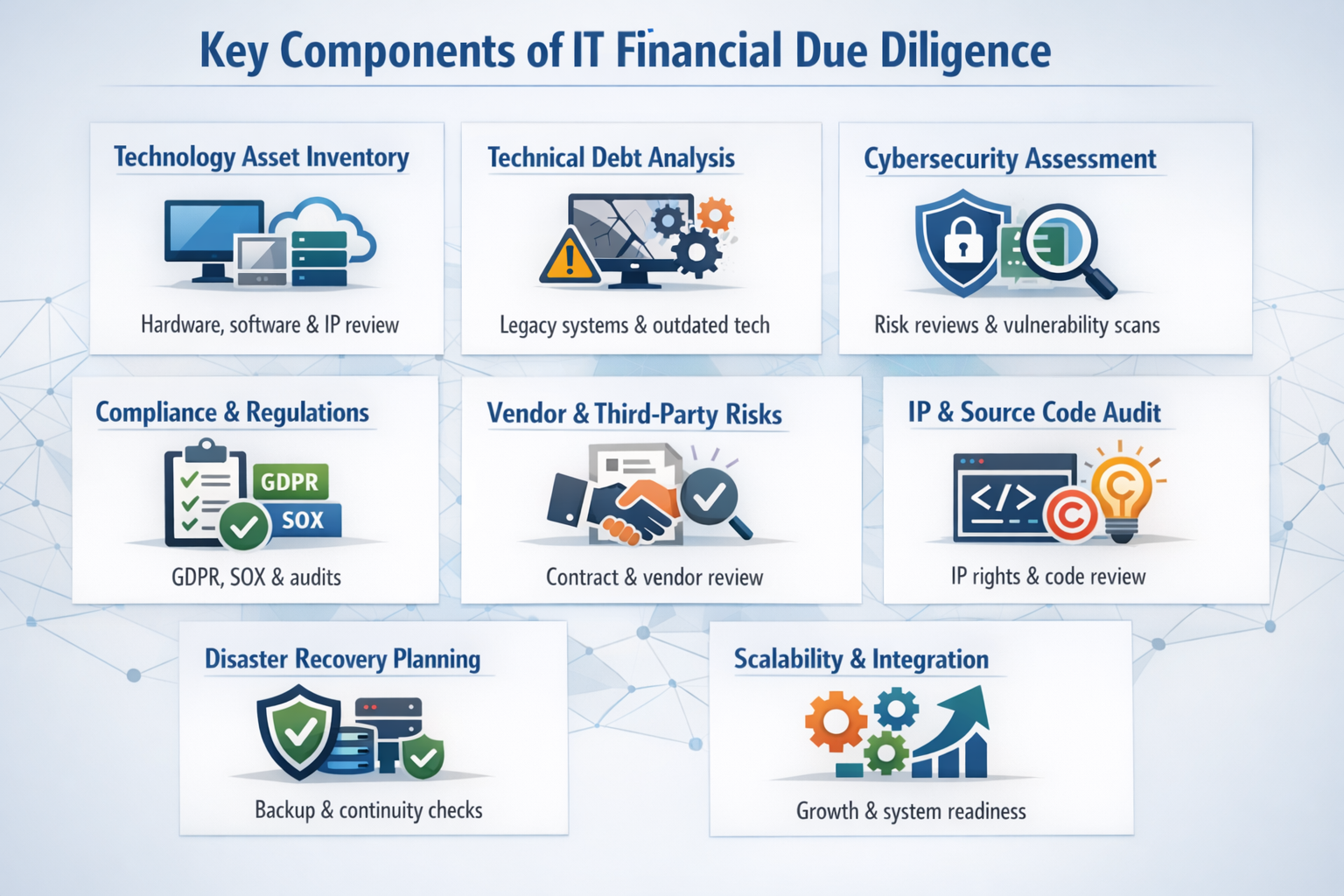
A robust diligence process covers every aspect of the technology environment, from infrastructure to compliance. Each area below requires a focused review, with clear documentation and follow-up actions.
Technology Asset Inventory: Start by cataloging every piece of hardware, software, cloud service, and proprietary IP. This includes not only what is currently in use, but also any shadow IT, unsupported applications, or legacy systems that may not be visible in standard reports. Confirm licensing, version status, and document all assets. This prevents surprises and ensures a complete risk profile.
Assessment of Technical Debt: Technical debt is often invisible until it becomes a problem. Review all legacy systems, unsupported software, and custom code. Interview IT staff and review maintenance logs to estimate the cost and timeline for upgrades or replacements. Quantify the impact of deferred maintenance, and identify any systems that are at risk of failure or security breach.
Cybersecurity Risk Assessment: Cybersecurity is a moving target, and past performance is not always a guarantee of future safety. Review breach history, vulnerability scans, and access control policies. Examine incident response plans and penetration test results. Identify any unpatched vulnerabilities or weak controls, and require remediation before closing.
Compliance and Regulatory Review: Regulatory requirements are constantly evolving, and non-compliance can result in significant penalties. Audit for GDPR, SOX, and any industry-specific requirements. Check audit trails, data retention policies, and evidence of regular compliance reviews. Resolve any missing documentation or failed audits before the deal is finalized.
Vendor and Third-Party Risk: Many companies rely on third-party vendors for critical systems and support. Analyze all vendor contracts, support agreements, and integration points. Identify vendor lock-in, unfavorable renewal terms, and unsupported dependencies. Plan for contract renegotiation or vendor diversification if needed.
Intellectual Property and Source Code Audit: Intellectual property is a key value driver in many deals. Confirm ownership of all proprietary software, patents, and trademarks. Review source code for quality, documentation, and infringement risk. Address any gaps before integration.
Disaster Recovery and Business Continuity: Business continuity is only as strong as the last successful recovery test. Evaluate backup procedures, recovery drills, and business continuity plans. Confirm recent testing and coverage for all critical systems.
Scalability and Integration Readiness: The ability to scale and integrate with new systems is essential for post-acquisition success. Assess whether the technology stack can support future growth and integration. Review system architecture, workflow automation, and adaptability to new business requirements.
A well-structured checklist transforms the due diligence process from a reactive exercise into a proactive risk management tool. Each item below is designed to ensure that no critical area is overlooked and that every risk is addressed with a clear, actionable plan.
| Checklist Item | What to Evaluate | Potential Red Flags | Remediation Actions |
|---|---|---|---|
| Technology Asset Inventory | List all hardware, software, cloud services, and IP. Confirm licensing and documentation. | Missing licenses, unsupported systems, undocumented assets | Update inventory, resolve licensing gaps, and document all assets |
| Technical Debt Assessment | Review legacy systems, custom code, and maintenance logs. Estimate upgrade costs. | Outdated platforms, unsupported software, and high maintenance costs | Plan phased upgrades, allocate budget, and retire obsolete systems |
| Cybersecurity Controls | Examine breach history, vulnerability scans, and access controls. | Unpatched vulnerabilities, weak controls, and recent breaches | Patch systems, strengthen controls, and conduct security training |
| Compliance Review | Audit for GDPR, SOX, and industry-specific requirements. | Incomplete audit trails, missing policies, and failed audits | Update policies, train staff, and schedule regular audits |
| Vendor and Third-Party Review | Review contracts, support agreements, and integrations. | Vendor lock-in, unfavorable terms, unsupported integrations | Renegotiate contracts, diversify vendors, update integrations |
| IP and Source Code Audit | Confirm ownership, code quality, and documentation. | Unclear ownership, poor documentation, infringement risk | Clarify ownership, improve documentation, and address legal risks |
| Disaster Recovery Planning | Evaluate backup procedures and recovery drills. | No recent tests, incomplete coverage, outdated plans | Update plans, schedule drills, and expand backup scope |
| Scalability Assessment | Review system architecture and workflow automation. | Bottlenecks, limited scalability, and poor integration | Redesign workflows, invest in scalable solutions, and plan phased integration |
Read Next: ERP Data Migration Checklist: Best Practices for Success
Technical debt, compliance gaps, and unreported breaches often remain hidden until diligence teams dig deeper. AI-powered analytics and targeted interviews with IT and business leaders can reveal vulnerabilities that standard checklists miss. For example, a review of access logs may uncover unauthorized data access, while a scan of custom code can identify security flaws or licensing issues.
Diligence findings should be used to inform both risk mitigation and value creation. Identifying inefficient workflows or outdated data management practices can guide post-acquisition improvements. When a breach or compliance failure is discovered, immediate remediation and ongoing monitoring are required. These insights support accurate valuation, negotiation, and integration planning.
Read Next: Post-Merger ERP System Integration: What Breaks First When It Goes Wrong?
Diligence findings are only valuable when they are accumulated and reported effectively. The way risks and opportunities are documented can shape negotiations, influence valuation, and guide post-close integration.
Diligence Report Structure: Organize findings by risk category, impact, and recommended actions. Include executive summaries, detailed appendices, and visual risk maps to support clarity and transparency.
Virtual Database Best Practices: Use secure, well-organized virtual databases to share sensitive documents, audit trails, and compliance evidence. Set granular access controls to protect intellectual property and sensitive data.
Actionable Recommendations: Translate each finding into a prioritized action, specifying responsible parties, timelines, and required resources. This ensures that remediation and integration steps are clear and measurable.
Supporting Valuation and Negotiation: Use diligence insights to inform deal terms, such as escrow requirements, price adjustments, or indemnification clauses. Well-documented risks can provide leverage in negotiations and protect your investment.
Governance and Ongoing Monitoring: Establish post-close governance structures, including regular audits, compliance reviews, and performance dashboards. Continuous monitoring helps ensure that risks are managed and opportunities are realized.
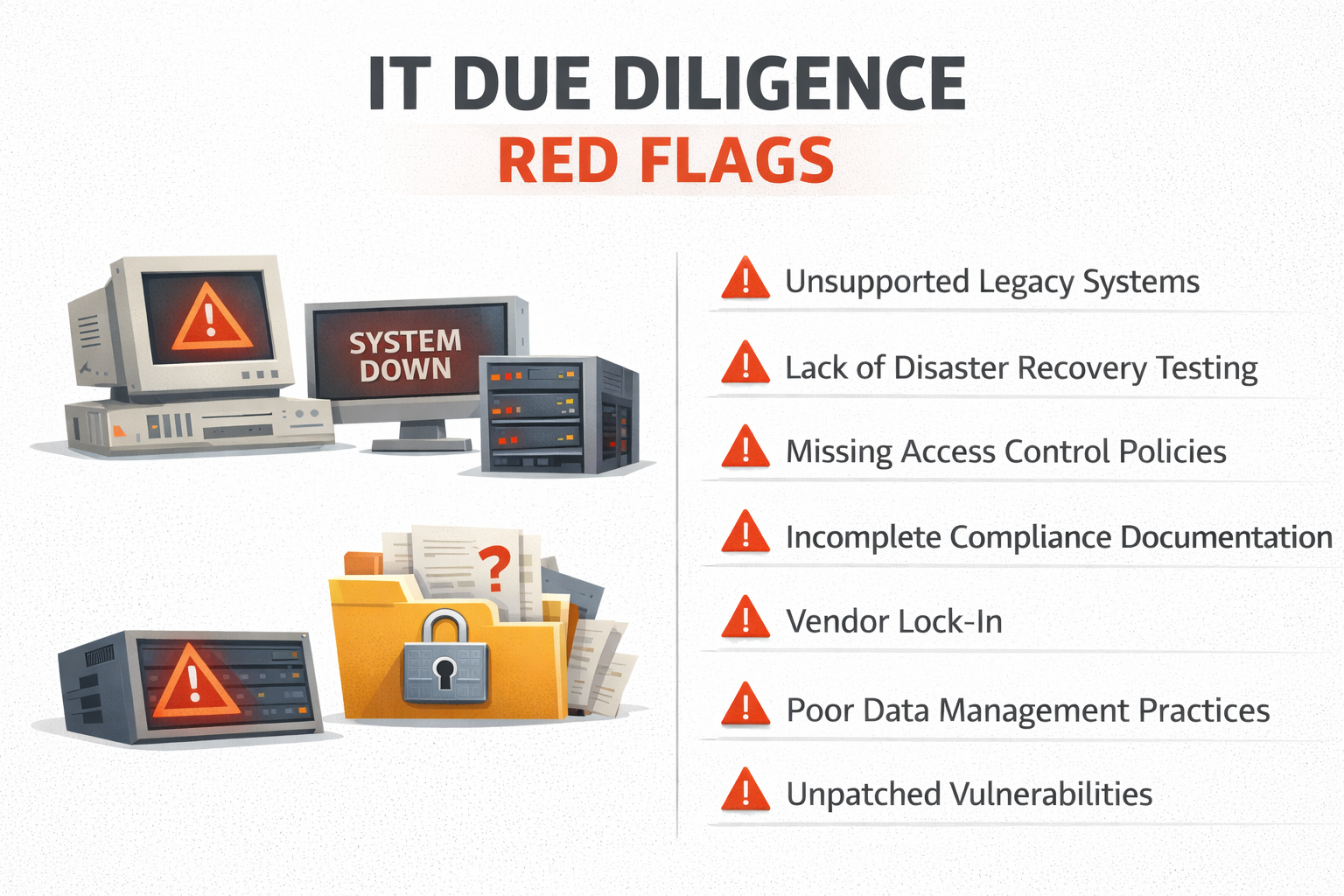
Hidden risks in IT environments can secretly undermine even the most promising M&A deals. Potential risks in IT systems have often emerged as patterns—recurring system outages, unexplained cost overruns, or inconsistent audit results. When diligence teams recognize these warning signs early, they can prevent operational disruptions, regulatory penalties, and unexpected remediation costs after closing.
| Red Flag | Why It Matters | Actionable Remediation |
|---|---|---|
| Unsupported Legacy Systems | Can cause failures, high costs, and security risks | Develop a phased replacement plan, allocate upgrade budget, and prioritize critical systems |
| Lack of Disaster Recovery Testing | Increases risk of data loss and downtime | Schedule recovery drills, update documentation, and expand backup coverage |
| Missing Access Control Policies | Exposes sensitive data to unauthorized access | Implement role-based controls, review permissions, and conduct regular audits |
| Incomplete Compliance Documentation | Can trigger penalties and failed audits | Update policies, maintain audit trails, and schedule compliance reviews |
| Vendor Lock-In | Limits flexibility and increases costs | Renegotiate terms, diversify vendors, and plan a gradual migration |
| Poor Data Management Practices | Causes reporting errors and compliance failures | Standardize data, implement governance, invest in quality tools |
| Unpatched Vulnerabilities | Raises the risk of cyberattacks and breaches | Establish patch management, run vulnerability scans, and train IT staff |
The value of IT due diligence extends far beyond the deal close. Integrating findings into the broader M&A strategy ensures that technology supports business objectives, mitigates risk, and enables scalable growth.
Technology must support the acquirer’s strategy, operational goals, and future growth. This alignment requires a clear understanding of how the target company’s systems, workflows, and data management practices fit into the broader business context.
Teams should map systems, workflows, and data management practices to business priorities. Evaluate whether current systems can scale, support new models, and comply with regulations. When technology is aligned, it drives value and reduces risk.
Translating diligence findings into a practical, actionable roadmap is essential for realizing the full value of the deal. The roadmap should prioritize remediation, integration, and continuous improvement.
Prioritizing Remediation: Sequence remediation efforts based on risk severity, business impact, and resource availability. Address critical vulnerabilities and compliance gaps first to minimize exposure.
Integration Planning: Develop detailed plans for merging workflows, data, and systems. Assign clear responsibilities, set milestones, and monitor progress to ensure a smooth transition.
Governance and Compliance: Establish robust governance structures, including regular audits, compliance reviews, and performance metrics. This supports ongoing risk management and regulatory adherence.
Continuous Improvement: Use diligence insights to drive ongoing optimization of technology assets, workflows, and data management practices. Regularly review and update the roadmap to reflect changing business needs and emerging risks.

AI and automation are transforming due diligence. AI enables faster, more accurate analysis of large data sets, uncovering vulnerabilities that might otherwise remain hidden. For example, AI can analyze source code for security flaws, scan contracts for unfavorable terms, and flag anomalies in access control logs. Advanced AI tools can also fix issues and create highly accurate solutions.
Automation streamlines repetitive tasks, such as data extraction and document review, freeing up experts to focus on higher-value analysis. By integrating AI into the due diligence framework, investment teams can enhance risk assessment, improve decision-making, and accelerate the overall process. This approach not only uncovers hidden risks but also supports a more scalable and efficient diligence process.
Read Next: AI Readiness Assessment for Manufacturers: A Practical 5-Step Framework
Case examples illustrate the types of risks and opportunities that emerge during M&A.
Technical Debt Discovery: A review of maintenance logs and system architecture revealed unsupported legacy platforms. The team developed a phased modernization plan and allocated a budget for upgrades.
Data Breach Uncovered: Forensic analysis identified an undisclosed data breach affecting sensitive customer information. Remediation included strengthening access controls, notifying affected parties, and implementing ongoing monitoring.
Compliance Gaps: Incomplete SOX documentation and missing GDPR policies were flagged. The acquirer updated policies, trained staff, and established regular audit schedules.
Vendor Lock-In: Costly vendor dependencies with unfavorable renewal terms were uncovered. The company renegotiated contracts and diversified vendor relationships.
Financial due diligence for IT systems is a structured evaluation of a target company’s technology assets, risks, and operational costs during a merger or acquisition. The process covers hardware, software, cybersecurity, compliance, and technical debt to uncover risks and validate asset value.
Common IT risks include unsupported legacy systems, unpatched vulnerabilities, incomplete compliance documentation, vendor lock-in, and poor data management. These can cause operational disruptions, regulatory penalties, and unexpected costs.
IT due diligence identifies risks and liabilities that may require immediate investment or reduce long-term value. Findings such as technical debt or compliance gaps can lead to price adjustments or deal renegotiation.
A checklist should cover asset inventory, technical debt, cybersecurity, compliance, vendor risk, IP and source code, disaster recovery, and scalability. Each item should include evaluation criteria and remediation steps.
AI automates data analysis, identifies vulnerabilities, and fixes code or contract errors. AI tools scan source code, review contracts, and monitor access logs, supporting faster and more accurate risk assessment.
Best practices include developing a prioritized remediation roadmap, assigning responsibilities, establishing governance, and conducting regular audits. Continuous improvement and monitoring ensure risks are managed, and technology supports business goals.
The real impact of IT due diligence is measured after the deal closes. Diligence findings are a blueprint for operational improvement, cost control, and future growth. Teams that move quickly from identification to action can transform vulnerabilities into opportunities, using remediation and integration as levers for value creation.
Act on critical risks without delay: Address technical debt, compliance gaps, and cybersecurity exposures as top priorities to prevent costly disruptions and regulatory penalties.
Translate findings into a clear integration roadmap: Use diligence insights to guide system upgrades, workflow alignment, and data governance, ensuring technology supports business strategy from day one.
Maintain oversight and adapt as you grow: Establish regular audits, performance reviews, and feedback loops to keep technology aligned with evolving business needs and regulatory requirements.
RubinBrown provides independent audits, data health assessments, and risk reviews that help organizations clarify exposures and build a technology foundation for long-term value. Schedule a call to see how a focused IT assessment can help you uncover hidden risks, address exposures, and support confident M&A decisions.

Strategic ERP integration after acquisition ensures cost savings, clean migration, and operational control. Learn how to merge systems without...
.png)
 Admin : Jan 15, 2025, 9:28:59 AM
Discover how mastering digital transformation can redefine your business models for lasting success. Explore strategies, trends, and examples to...

If you have ever taken on a DIY project for your home, you’ll probably discover quickly that it has some surprising parallels to an ERP selection.