ERP Risk in Manufacturing: How to Avoid Costly Failures
You’re leading an ERP rollout in a manufacturing environment. High stakes, tight margins, and zero room for downtime. You already know what’s at...
3 min read

ERP systems are designed to streamline operations and drive business value, but for many organizations, the reality falls short. Implementing an ERP system is a complex, high-stakes initiative that often introduces significant operational, financial, and organizational risk.
Understanding why ERP implementations fail is critical for reducing that risk and improving outcomes. In this guide, we break down the most common causes of ERP failure and what organizations can do to avoid them.
The ERP implementation failure rate is commonly estimated to be between 55% and 75%, meaning that a majority of ERP projects fail to meet their intended objectives. This range is widely cited across industry analyses and reflects the complexity and risk involved in large-scale ERP initiatives.
While exact figures vary depending on how “failure” is defined, many ERP projects experience significant challenges, such as cost overruns, delays, and low user adoption, that prevent them from delivering full business value.
As a result, ERP failure is less about complete project collapse and more about falling short of expected outcomes, making these initiatives high-risk and highly dependent on strong planning, governance, and change management.
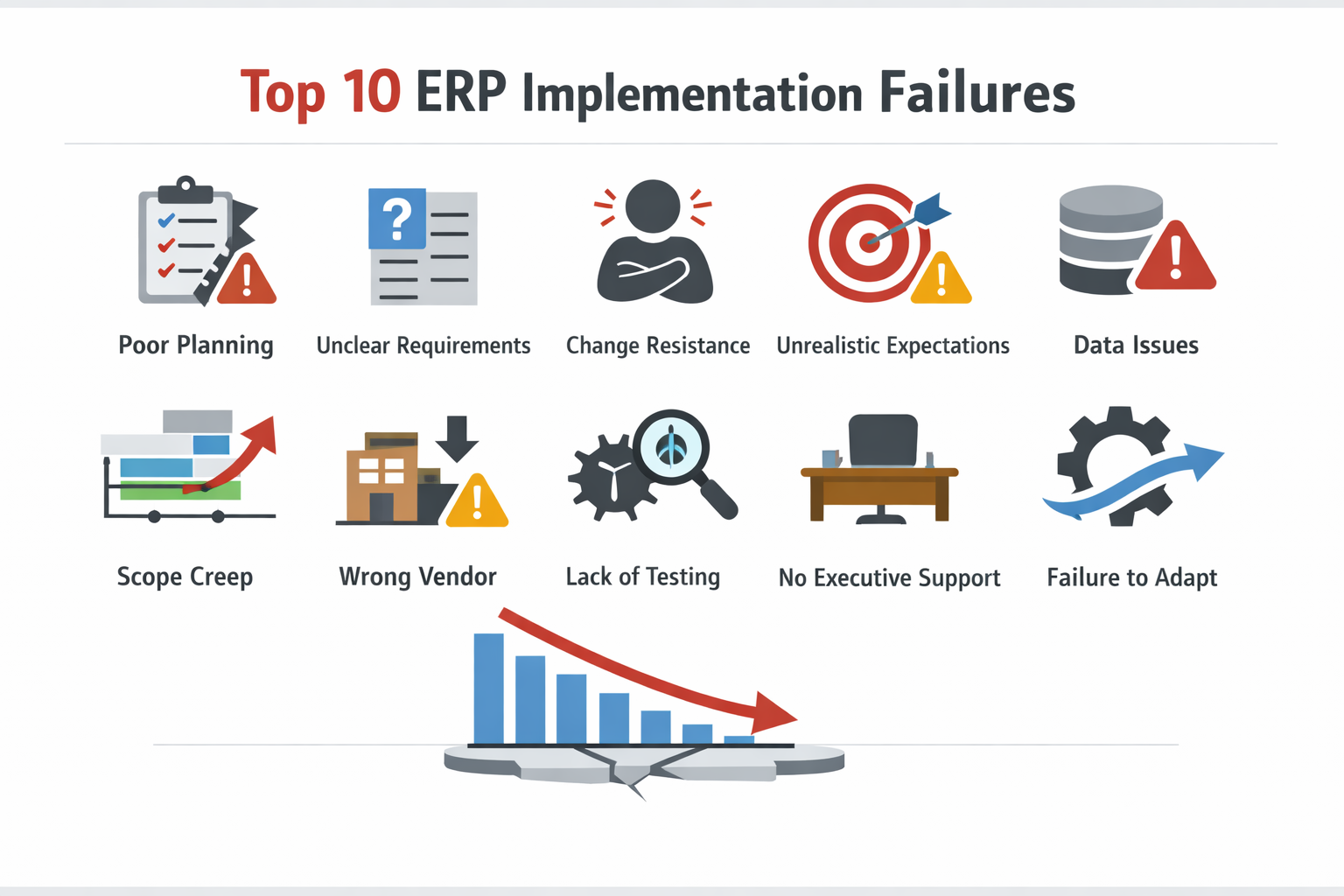
ERP implementations rarely fail due to a single issue. Instead, failure is typically the result of multiple breakdowns across strategy, execution, and organizational alignment.
These projects sit at the intersection of technology, business processes, and people making them inherently complex and highly sensitive to misalignment. Even small gaps in planning, governance, or change management can compound over time and lead to significant cost overruns, delays, or reduced business value.
Understanding the root causes behind ERP failure is essential for organizations looking to improve outcomes and avoid repeating common mistakes. Below are the most common factors that contribute to ERP implementation failure:
Inadequate planning and strategy are one of the most common drivers of ERP implementation failure. Rushing into implementation without a clear roadmap can lead to budget overruns, scope creep, and ultimately, project failure. Organizations must invest time in meticulous planning, including defining objectives, setting realistic timelines, and allocating sufficient resources.
Poorly defined requirements are a major contributor to ERP implementation failure, especially in complex environments. Failing to understand the specific needs of the organization can result in a system that doesn't align with business processes or objectives. Detailed and comprehensive requirements gathering is essential to avoid costly customization and adaptation down the line.
Insufficient change management is a leading cause of ERP implementation failure, often resulting in low user adoption and resistance. Employees must be prepared for the changes an ERP system will bring. Without proper training, communication, and support, resistance can emerge, leading to user dissatisfaction and low adoption rates.
Organizations that lack internal expertise often benefit from working with experienced advisors to define a clear ERP strategy and implementation roadmap. Learn how RubinBrown’s ERP Advisory Services can help reduce risk and improve implementation outcomes.
Unrealistic expectations frequently contribute to ERP implementation failure by misaligning outcomes with system capabilities. ERP is not a magic wand that will instantly solve all organizational problems. Organizations must have a realistic understanding of what the system can and cannot achieve.
Inadequate data management is a critical factor in ERP implementation failure, as poor data quality undermines system performance. Inaccurate or incomplete data can undermine the integrity of the system, leading to errors and inefficiencies. A robust data cleansing and migration strategy is essential.
Scope creep is a common driver of ERP implementation failure, leading to delays, cost overruns, and project complexity. This can result in delays, increased costs, and a system that doesn't meet its original objectives. Effective project governance and change control processes are necessary to prevent scope creep.
Poor vendor selection can significantly contribute to ERP implementation failure when the solution does not align with business needs. Choosing a vendor without conducting thorough due diligence can lead to poor fit, inadequate support, and costly customization. Organizations must evaluate potential vendors carefully and consider their long-term partnership capabilities.
Inadequate testing and quality assurance often result in ERP implementation failure due to unresolved system issues at launch. Comprehensive testing is essential to identify and address issues before they impact daily operations.
Lack of executive involvement is a key factor in ERP implementation failure, as it weakens governance and strategic alignment. When leadership is disengaged or uncommitted, it can send a message that the project is not a priority, resulting in project delays and complications.
Failure to adapt to evolving business needs can lead to long-term ERP implementation failure and reduced system value. Failing to adapt the ERP system to these changes can render it obsolete. A lack of post-implementation support and continuous improvement can lead to long-term failure.
The high failure rate of ERP projects is a stark reminder that implementing these complex systems is not to be taken lightly. Organizations must approach ERP projects with careful planning, realistic expectations, and a commitment to change management and continuous improvement.
By addressing these common pitfalls, organizations can increase their chances of achieving ERP success and realizing the benefits these systems promise. ERP projects may be challenging, but with the right approach, they can lead to significant improvements in efficiency and competitiveness.
RubinBrown can help your organization be a part of the 25% of organizations that successfully implement their ERP. Contact us today for your roadmap to success.

You’re leading an ERP rollout in a manufacturing environment. High stakes, tight margins, and zero room for downtime. You already know what’s at...

“Whew, that was easy. We finally picked an ERP software vendor. When do we go live?” Well according to the ERP implementation plan that we...

Enterprise Resource Planning (ERP) systems are vital to the efficient operation of modern businesses, streamlining processes, integrating data, and...