

9 min read

Integrating Assets and People: A Smarter Approach to Asset Management for the Energy Sector

Integrating Assets and People: A Smarter Approach to Asset Management for the Energy Sector

Optimizing asset management for the energy sector means connecting energy assets, maintenance, inventory, and field operations through a single operating strategy. With greater visibility into asset performance and workforce activities, energy organizations can improve reliability, reduce downtime, and operate more efficiently.

The need for connected operations continues to grow. According to the U.S. Energy Information Administration (EIA), electricity customers experienced an average of 11 hours of power interruptions in 2024, nearly twice the annual average of the previous decade. While major weather events drove much of that increase, the data highlights the importance of understanding asset condition, coordinating maintenance activities, and responding quickly when failures occur.

Modern ERP platforms support these efforts by bringing Enterprise Asset Management (EAM), workforce management, inventory, and operational reporting together in a single source of truth. With connected assets and people, energy organizations can strengthen asset reliability, reduce unplanned downtime, and make more informed operational decisions.

💡 TL;DR: Connected Assets Drive Better Energy Operations

  • Core Question: Are your energy assets, maintenance teams, and field operations connected through one operating model, or are they managed in disconnected systems?

  • Connected Asset Management: Best when asset data, preventive maintenance, workforce scheduling, inventory, and work orders operate together to support reliable, efficient operations.

  • Disconnected Operations: Common when maintenance, workforce management, and asset information are spread across multiple systems, creating delays, duplicate work, and limited operational visibility.

  • Business Impact: Integrating assets and people helps improve asset performance, increase asset reliability, reduce unplanned downtime, and strengthen operational efficiency across energy and utility organizations.

  • Common Risk: Many organizations invest in new technology before addressing fragmented processes, inconsistent asset data, or reactive maintenance practices, limiting the value of modernization initiatives.

  • What to Evaluate: Review your asset lifecycle processes, maintenance planning, workforce scheduling, inventory management, and the quality of the operational data supporting everyday decisions.

  • Recommended Next Step: Before investing in new ERP or Enterprise Asset Management technology, document your current operating model, identify operational gaps, and define the business outcomes you want to achieve through modernization.


Organizations modernizing asset management often discover that technology is only one part of the solution. RubinBrown's ERP Advisory Services and Energy & Utilities industry advisory services help organizations evaluate operational readiness, assess Enterprise Asset Management (EAM) requirements, and develop vendor-independent ERP strategies that align technology investments with long-term business objectives.

The Strongest Energy Operations Connect Assets and People

Energy organizations rely on more than physical infrastructure to deliver reliable service. Every power plant, substation, transmission line, renewable energy installation, and distribution network also depends on skilled field teams to inspect, maintain, and repair critical assets throughout their lifecycle. Effective asset management is not simply about tracking equipment. It requires connecting assets, people, and operational data so maintenance activities, workforce decisions, and business priorities stay aligned.

Reliable Assets Depend on Skilled Field Teams

Whether maintaining wind turbines, servicing substations, or responding to unexpected equipment failures, field teams need immediate access to accurate asset data, maintenance history, work orders, and inventory information. At the same time, operations leaders need visibility into workforce availability, asset condition, and maintenance priorities to make informed decisions.

When these operational activities are connected, organizations can:

  • Prioritize preventive maintenance based on asset condition.

  • Respond faster to equipment failures and changing operational demands.

  • Improve workforce scheduling and field productivity.

  • Reduce maintenance costs and unplanned downtime.

  • Deliver safer, more reliable utility operations.

Read More: How Mobile ERP Solution Empowers Manufacturing Efficiency and Agility

Disconnected Operations Create Hidden Risks

Many energy organizations still manage asset maintenance, workforce scheduling, inventory, and operational reporting across multiple applications or manual processes. As a result, maintenance teams often work with incomplete information, while leaders lack a complete view of asset performance and operational readiness.

The differences between connected and disconnected operations become clear when comparing day-to-day asset management practices.

Connected Operations Disconnected Operations
Centralized asset data provides a complete view of asset history and condition. Asset information is spread across multiple systems or spreadsheets.
Maintenance, inventory, and workforce activities are coordinated. Teams rely on manual communication and disconnected workflows.
Field crews have timely access to work orders and maintenance records. Critical information is difficult to access in the field.
Preventive maintenance is planned using operational priorities and asset data. Reactive maintenance becomes the default approach.
Leaders monitor asset performance and workforce activity through a unified operational view. Limited visibility makes it harder to prioritize work and allocate resources effectively.

Organizations that connect assets, maintenance, inventory, and workforce operations are better positioned to improve asset reliability, strengthen operational efficiency, and make faster, more informed operational decisions. More importantly, they create a stronger foundation for long-term infrastructure resilience and sustainable performance.

Read Next: 10 Signs Your Business Processes Are Broken and Slowing You Down

Modern ERP Brings Asset and Workforce Management Together

Effective asset management depends on more than maintaining equipment. It requires maintenance activities, inventory, procurement, and workforce scheduling to operate as part of a connected process. Modern ERP platforms help unify these functions, giving energy organizations a single operational view instead of disconnected systems and manual coordination.

One Source of Truth Improves Operational Visibility

When asset information is centralized, everyone works from the same operational data. Maintenance teams can review asset history before arriving on-site, operations managers can monitor work in progress, and executives gain greater visibility into asset performance, maintenance priorities, and workforce utilization.

Instead of relying on multiple spreadsheets or standalone applications, organizations can make decisions using consistent, up-to-date information across the business.

Connected operations help organizations:

  • Improve visibility into asset condition and maintenance history.

  • Strengthen workforce scheduling and resource planning.

  • Coordinate maintenance, inventory, and field operations more effectively.

  • Support faster, more informed operational decision-making.

Connected Processes Reduce Operational Delays

Maintenance work rarely happens in isolation. A single repair may require available technicians, replacement parts, approved work orders, and access to maintenance records before work can begin. Modern ERP platforms help connect these operational processes so information flows more efficiently across the organization.

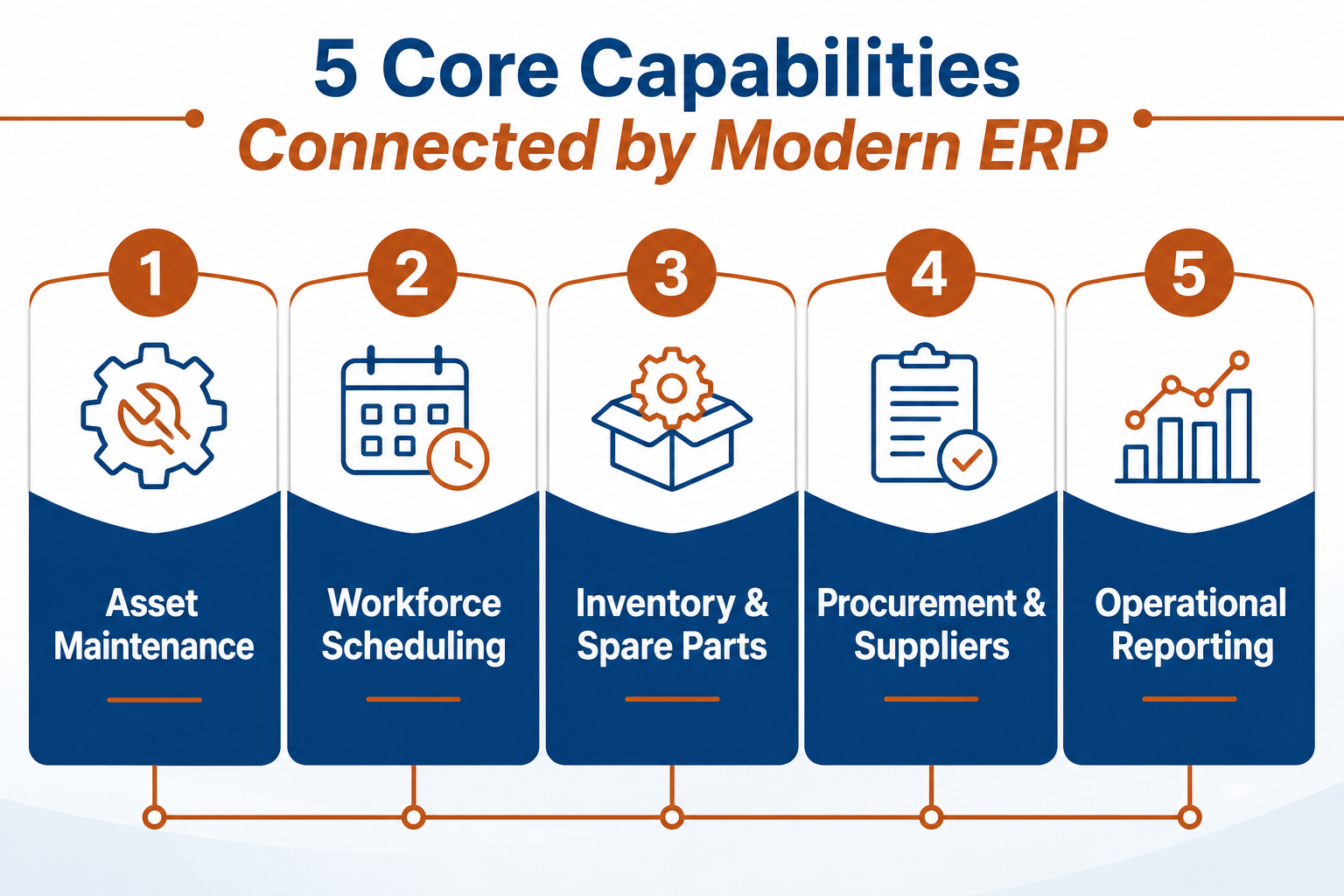
Modern ERP helps connect five core operational capabilities that drive effective asset management:

1. Asset Maintenance: Preventive maintenance becomes more effective when maintenance schedules are based on current asset condition, service history, and operational priorities rather than fixed intervals alone. Connecting maintenance planning with asset data helps organizations reduce reactive repairs, improve asset reliability, and extend the lifecycle of critical infrastructure.

2. Workforce Scheduling: Field teams perform best when scheduling considers technician skills, certifications, location, availability, and job priority. A connected operating model enables dispatchers and operations leaders to assign the right people to the right work while improving response times, workforce utilization, and overall operational efficiency.

3. Inventory and Spare Parts Management: Maintenance activities often depend on having the right parts available at the right time. Integrating inventory with asset maintenance helps organizations maintain appropriate stock levels, reduce delays caused by missing materials, and balance inventory costs with operational readiness.

4. Procurement and Supplier Coordination: Procurement should support maintenance operations rather than function independently. When purchasing activities are aligned with maintenance schedules and inventory requirements, organizations can replenish critical materials more efficiently, reduce supply chain disruptions, and improve planning across departments.

5. Operational Reporting: Reliable reporting brings together asset performance, maintenance activity, workforce utilization, inventory, and operational trends into a single operational view. With consistent, centralized data, leaders can monitor performance, identify emerging issues, and make more informed decisions that support long-term operational improvement.

By connecting these operational capabilities, energy organizations can reduce delays, improve coordination across departments, and build a stronger foundation for reliable, efficient operations.

Better Data Leads to Better Decisions

Modern ERP does more than centralize information. It provides leaders with a clearer understanding of how assets, maintenance activities, workforce capacity, inventory, and operational performance influence one another. With reliable operational data, organizations can identify maintenance priorities earlier, allocate resources more effectively, and make decisions based on facts rather than assumptions.

Ultimately, better decisions begin with better visibility. When asset information, workforce activities, and operational reporting are connected, energy organizations are better positioned to improve asset reliability, control maintenance costs, and support long-term operational performance.

Read Next: Asset Management with ERP Systems: The Utility Leader's Guide to Operational Efficiency

Where Energy Organizations Lose Operational Efficiency

Operational inefficiencies rarely begin with a major equipment failure. More often, they develop gradually as asset maintenance, workforce management, inventory, procurement, and reporting evolve independently over time. What starts as a small disconnect between teams or systems can eventually reduce asset reliability, increase maintenance costs, and make day-to-day operations more difficult to manage.

Rather than viewing these challenges as isolated issues, energy organizations should recognize them as symptoms of disconnected operational processes. The table below illustrates where these inefficiencies commonly emerge and how they affect overall asset performance.

Operational Area Common Challenge Business Impact
Asset Maintenance Maintenance schedules rely on incomplete or outdated asset information. Increased reactive maintenance, higher costs, and more unplanned downtime.
Workforce Operations Field teams lack timely access to work orders, maintenance history, or asset documentation. Longer repair times and lower workforce productivity.
Inventory Management Spare parts are unavailable when maintenance activities begin. Delayed repairs, equipment outages, and excess emergency purchasing.
Procurement Purchasing decisions are disconnected from maintenance priorities and operational demand. Longer lead times, higher inventory costs, and inefficient resource planning.
Operational Reporting Asset data and performance metrics are inconsistent across departments. Limited visibility, slower decision-making, and reduced confidence in operational reporting.

Breaking the Cycle of Disconnected Operations

Many organizations attempt to solve these challenges one at a time by replacing individual systems or improving isolated workflows. While those efforts may deliver incremental improvements, they rarely address the underlying issue: operational processes remain disconnected.

Long-term improvement comes from treating asset management, workforce planning, inventory, procurement, and reporting as parts of the same operating model. When these functions share consistent operational data, organizations gain a clearer understanding of asset health, maintenance priorities, workforce capacity, and overall operational performance.

The result is more than better maintenance planning. It is a stronger foundation for improving asset reliability, supporting regulatory compliance, controlling maintenance costs, and making faster, more informed operational decisions.

Read More: Business Process Documentation for Digital Transformation

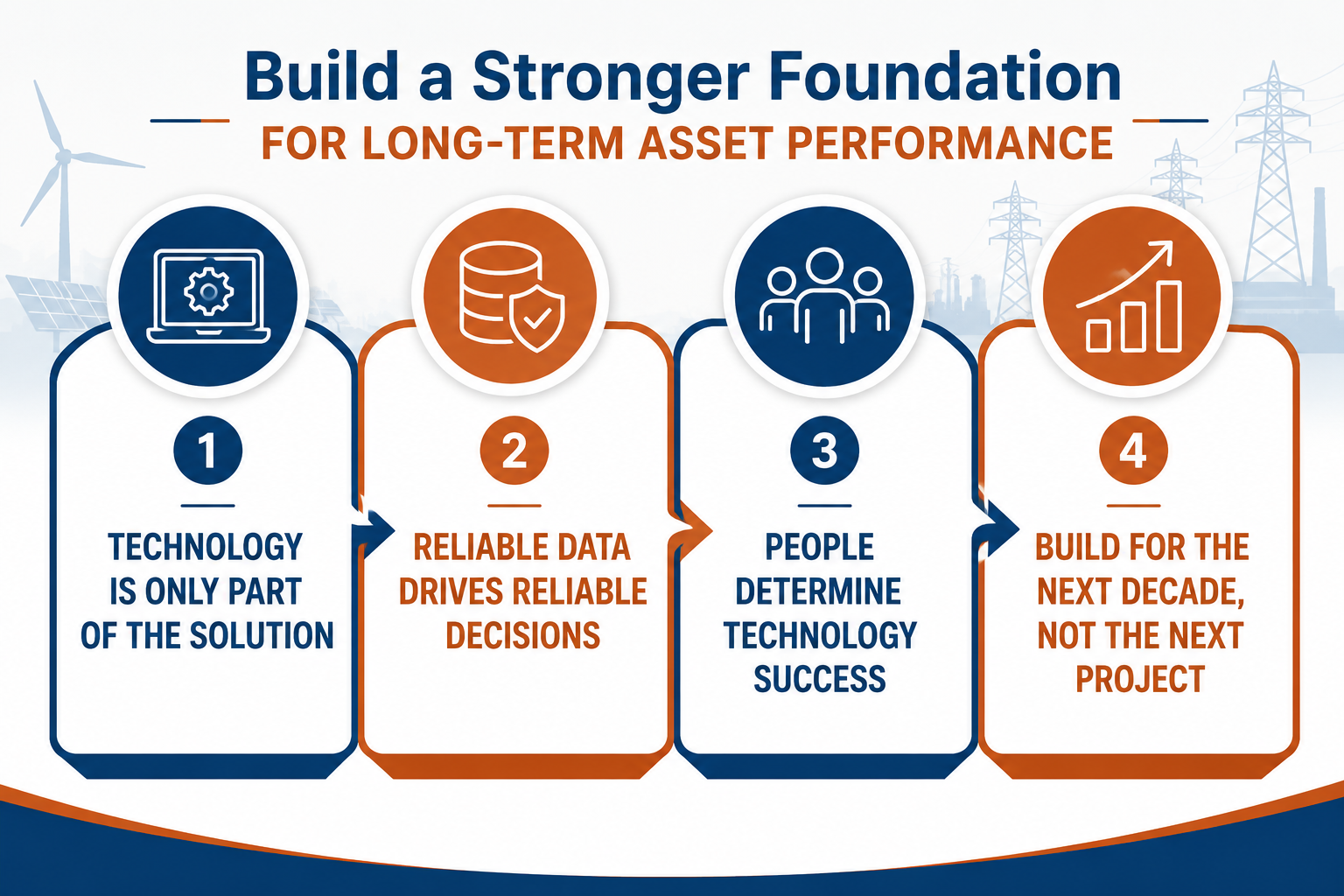
Build a Stronger Foundation for Long-Term Asset Performance

Improving asset management is not simply about implementing new technology. Long-term success depends on strengthening the operational foundation that supports maintenance, workforce management, and executive decision-making. Organizations that take a strategic approach are better positioned to improve asset reliability while adapting to changing business demands, regulatory expectations, and future infrastructure investments.

Technology Is Only Part of the Solution

Technology should strengthen operational processes, not compensate for ineffective ones. Before evaluating ERP or Enterprise Asset Management (EAM) solutions, organizations should first understand how maintenance activities, workforce scheduling, inventory management, procurement, and reporting function today.

Taking time to document current workflows helps uncover inefficiencies, clarify business requirements, and ensure future technology investments solve operational challenges instead of simply replacing existing systems.

Planning a major ERP or Enterprise Asset Management initiative? Organizations often benefit from an independent operational assessment before evaluating software vendors. RubinBrown's ERP Advisory Services help organizations document current-state processes, define future business requirements, evaluate ERP readiness, and develop vendor-independent modernization roadmaps that align technology investments with long-term operational goals.

Reliable Data Drives Reliable Decisions

Accurate operational data is the foundation of effective asset management. Asset records, maintenance history, inventory information, work orders, and workforce data should be consistent, complete, and accessible across the organization. Without trusted data, leaders often struggle to prioritize maintenance activities, monitor asset performance, and make confident operational decisions.

A strong data foundation also prepares organizations for more advanced capabilities, including predictive maintenance, operational analytics, AI-driven insights, and long-term asset performance optimization.

Read Next: How to Build a Data Governance Framework for Your ERP

People Determine Whether Technology Succeeds

Even the most capable technology platforms depend on the people using them every day. Successful modernization requires maintenance teams, field personnel, operations leaders, and executives to adopt consistent processes and work from the same operational information.

Organizations that invest in governance, training, and cross-functional collaboration are more likely to achieve lasting improvements in asset reliability, workforce productivity, and operational consistency than those that focus solely on technology implementation.

Build for the Next Decade, Not the Next Project

Energy organizations continue to navigate aging infrastructure, evolving regulatory expectations, renewable energy investments, and changing customer demand. Asset management strategies should support long-term operational resilience rather than simply addressing today's maintenance priorities.

Organizations that build connected operations today are better positioned to improve operational efficiency, maximize asset performance, strengthen workforce productivity, and adapt confidently as business needs evolve.

Ultimately, successful asset management is not measured by the technology an organization implements. It is measured by how effectively assets, people, data, and operational processes work together to support reliable, efficient, and resilient energy operations.

Read Next: From Reactive to Predictive Maintenance: How AI and ERP Transform Utility Asset Management

Connected Operations Create Stronger Energy Organizations

Effective asset management for the energy sector extends far beyond maintaining equipment. Long-term success depends on how well organizations connect energy assets, maintenance activities, workforce operations, inventory, and operational data to support faster decisions and more reliable service.

As energy infrastructure becomes more complex, organizations that strengthen these operational connections will be better positioned to improve asset performance, reduce downtime, control maintenance costs, and adapt to future business and regulatory demands.

Key Takeaways

  • Effective asset management depends on connecting assets, people, processes, and operational data.

  • Centralized operational visibility helps improve maintenance planning, workforce coordination, and executive decision-making.

  • Long-term asset reliability requires strong operational processes, trusted data, and cross-functional collaboration.

  • Modern ERP and Enterprise Asset Management (EAM) platforms deliver the greatest value when they support a connected operating model rather than isolated business functions.

Before investing in new technology, evaluate how maintenance, workforce management, inventory, procurement, and reporting operate across your organization. Identifying operational gaps first helps ensure future ERP and Enterprise Asset Management initiatives address the right business challenges and deliver sustainable long-term value.

Organizations planning to modernize asset management often benefit from an independent assessment of their operational processes, technology landscape, and long-term business objectives. RubinBrown's ERP Advisory Services help organizations evaluate ERP readiness, align technology investments with operational priorities, and develop practical modernization strategies tailored to the needs of the energy sector.

Ready to strengthen asset management across your energy operations? Schedule a consultation with RubinBrown to discuss your modernization goals and build a roadmap for long-term operational success.

Frequently Asked Questions

What is energy asset management?

Energy asset management is the process of planning, maintaining, monitoring, and optimizing physical assets throughout their lifecycle. It helps energy companies improve asset reliability, support preventive maintenance, reduce operational risk, and optimize asset performance across power plants, transmission networks, renewable energy assets, and other critical infrastructure.

How does ERP support asset management for the energy sector?

Modern ERP platforms connect Enterprise Asset Management (EAM), workforce management, inventory, procurement, and operational reporting within a single operating environment. By centralizing asset data and maintenance activities, organizations can streamline maintenance tasks, improve operational visibility, and make more informed decisions based on reliable, real-time data.

How can energy companies improve asset performance?

Improving asset performance begins with connecting maintenance planning, workforce scheduling, inventory management, and operational reporting. Organizations that leverage centralized asset information, proactive maintenance strategies, and performance monitoring are better positioned to reduce downtime, extend asset lifecycles, and improve long-term operational efficiency.

Why is preventive maintenance important for utility companies?

Preventive maintenance helps utility companies identify potential issues before they lead to unexpected equipment failures. Combined with asset monitoring, real-time performance metrics, and accurate maintenance history, preventive maintenance supports stronger asset reliability, reduces maintenance costs, and helps organizations maintain safe and reliable operations.

What should organizations evaluate before investing in asset management software?

Before selecting new asset management software or Enterprise Asset Management (EAM) technology, organizations should evaluate their operational processes, data quality, asset lifecycle management practices, workforce coordination, and reporting capabilities. Understanding these operational requirements first helps ensure future technology investments align with long-term business objectives rather than simply replacing existing systems.

Digital Twin in Manufacturing: How Simulation and ERP Are Shaping the Future of Smart Manufacturing

1 min read

Digital Twin in Manufacturing: How Simulation and ERP Are Shaping the Future of Smart Manufacturing

Digital twin technology in manufacturing allows organizations to create virtual representations of production assets, processes, and operations that...


Read More
Top 10 Best Manufacturing ERP Systems and Software Solutions for the Manufacturing Industry

1 min read

Top 10 Best Manufacturing ERP Systems and Software Solutions for the Manufacturing Industry

Manufacturing success relies on more than just efficient production lines—it demands a fully integrated approach to managing all business operations....

Read More
ERP for Chemical Manufacturing: Managing Compliance, Formulas, and Traceability

1 min read

ERP for Chemical Manufacturing: Managing Compliance, Formulas, and Traceability

An ERP for chemical manufacturing helps organizations manage formula security, batch traceability, regulatory compliance, and quality processes...

Read More